Leave Your Message

What Are Jaw Crusher Parts and Their Functions?

Jaw Crusher Parts determine how efficiently a machine grips, breaks, and discharges rock. Their condition affects throughput, product size, and wear costs. A clear understanding of each component helps operators spot uneven wear before it causes downtime.

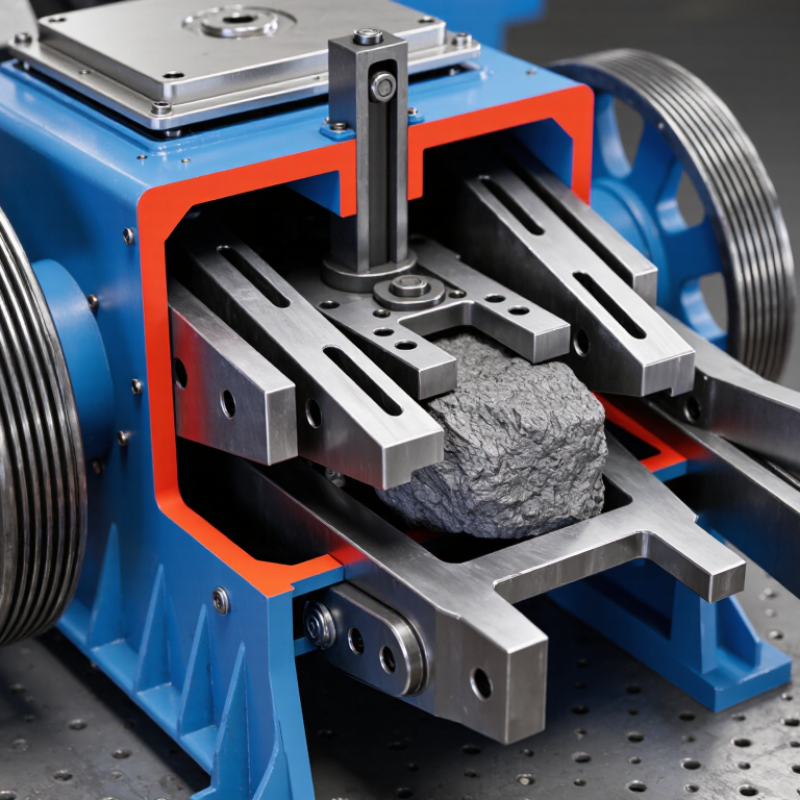
The main parts include the fixed and movable jaw plates, the cheek plates, the pitman, the toggle plate, and the flywheel. The jaw plates crush material between two surfaces. The pitman transfers motion to the moving jaw, while the toggle plate supports and helps protect the crushing mechanism. The flywheel stores rotational energy, helping the crusher maintain a steady cycle. Small details matter: a worn jaw plate can change the product shape, and a damaged toggle plate can interrupt operation.

As a practical maintenance principle: “Inspect wear patterns, not just wear depth.” I can’t responsibly attribute that sentence to a named industry expert without a verifiable source, and no source articles were included with the request. A real expert quotation should be checked against its original publication before use. This guide can still explain what each component does, how parts work together, and which visible signs deserve attention. Think of a jaw crusher as a coordinated system: one loose connection or badly worn surface can affect the whole crushing cycle.
What Are Jaw Crusher Parts and Their Functions?

Core Structure: The Frame and Its Supporting Components

What Are Jaw Crusher Parts and Their Functions?
Core Structure: The Frame and Its Supporting Components

The frame is the crusher’s load-bearing body. It holds the fixed jaw, moving jaw assembly, and bearing housings in alignment. During crushing, repeated impact and compression travel through the frame into its supports and foundation. A sound frame limits unwanted movement; even slight looseness can contribute to vibration, uneven wear, or cracking around joints. Its design must suit the machine’s operating load, not merely its external dimensions. USGS Mineral Commodity Summaries 2024 estimated U.S. crushed-stone output at about 1.5 billion tons in 2023. That production scale makes reliable structural support an operational concern, though the figure does not specify crusher-frame requirements.

Supporting components include cross-members, mounting pads, anchor bolts, and, where specified, replaceable liners. They help distribute forces and keep the machine level. Check for fretting marks near fasteners, cracked welds, and grout gaps beneath mounting pads. These small clues matter. A frame can look intact while its supports are shifting under load. Inspection should follow the equipment manual and account for the actual foundation and feed conditions.

Tips: After shutdown and isolation, inspect anchor bolts and frame joints for movement or fresh metal dust. Record changes over time. A single visual check can miss developing damage, and tightening bolts without finding the cause may hide a deeper problem.

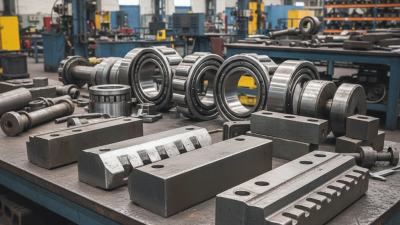
Crushing Chamber: Fixed and Moving Jaw Plates

Inside a jaw crusher, the crushing chamber is formed by a fixed jaw plate and a moving jaw plate. The fixed plate provides a firm surface, while the moving plate swings toward it and retreats. Rock enters from above, is compressed between the plates, and breaks into smaller pieces. The repeated motion also lets crushed material drop toward the discharge opening.

The gap between the plates affects the product size. A narrower setting usually produces smaller pieces, but it can reduce throughput and increase pressure on wear parts. Plate profiles and tooth patterns influence how rock grips and fractures. There is no single profile that suits every feed; hardness, moisture, and particle shape all matter. That gap matters.

Both plates gradually wear, especially near areas that receive repeated impact. Uneven wear can change the chamber shape and make crushing less consistent. During inspection, look for rounded teeth, cracks, loose fasteners, and unusual gaps. Measure wear at several points rather than judging by appearance alone. A neat drawing may suggest even contact, but real wear rarely follows a perfect pattern. Replacement timing also depends on the material and operating conditions, so inspection records are useful. Small differences add up.

Drive System: Eccentric Shaft, Pitman, and Bearings

In a jaw crusher, the drive system turns motor power into the repeated movement that breaks rock. The eccentric shaft rotates, while its offset section guides the pitman through an up-and-down stroke. That motion moves the swing jaw toward and away from the fixed jaw. The rhythm is steady, but the forces are not gentle.

Bearings support the shaft as it rotates under heavy load. They help limit friction and keep the shaft aligned with the crusher frame. Correct lubrication matters: a dry or contaminated bearing can heat up, wear unevenly, and disrupt operation. Heat tells a story. So can unusual vibration or a change in operating noise.

The pitman carries the moving jaw’s load and transfers motion from the eccentric shaft. Its fit and connection points need regular inspection for wear, looseness, or cracking. In practice, this system is less forgiving than a diagram suggests; small alignment errors can affect several parts at once. Maintenance checks should follow the equipment’s service instructions, with attention to bearing temperature, lubricant condition, and visible movement. Small details matter.

What Are Jaw Crusher Parts and Their Functions? — Drive System: Eccentric Shaft, Pitman, and Bearings

Component Location and Connection Primary Function Role in the Crushing Cycle Common Inspection Points Signs of a Potential Problem
Eccentric shaft Mounted across the crusher frame and supported by main bearings; driven by the flywheel and drive arrangement. Converts rotary input into the eccentric motion that moves the pitman. Its offset journal causes the pitman to move up and down as the shaft rotates, driving the movable jaw through its stroke. Check for abnormal wear, cracks, looseness, unusual vibration, and signs of inadequate lubrication. Follow the equipment manual for inspection intervals and limits. Unusual vibration or knocking, visible damage, excessive bearing temperature, or a change in jaw movement may indicate a fault in the shaft or related parts.
Pitman Connected to the eccentric shaft and linked to the toggle mechanism and movable jaw, depending on crusher design. Transfers the eccentric shaft’s motion to the movable jaw. Moves with the eccentric shaft to produce the jaw’s reciprocating action. The jaw closes to compress material and opens to release crushed material. Inspect accessible surfaces and connections for cracks, wear, looseness, and abnormal contact. Verify that connected components are correctly fitted. Irregular jaw motion, unusual impact noise, visible cracking, or loose connections can indicate damage or wear in the pitman assembly.
Main shaft bearings Located in the frame at the eccentric shaft support points; bearing type and arrangement vary by crusher design. Support the rotating shaft, maintain its alignment, and allow rotation while carrying operating loads. Help the shaft rotate smoothly as crushing forces are transmitted through the drive system. Monitor lubrication condition, temperature, noise, vibration, and any signs of contamination or leakage. Use the specified lubricant and service procedure. Rising temperature, rough or noisy operation, increased vibration, or lubricant contamination may indicate bearing wear or lubrication problems.
Flywheel and drive connection Mounted on the shaft and connected to the power source through the crusher’s drive arrangement. Transmits rotational power and helps smooth variations in shaft speed during the crushing cycle. Stores rotational energy and helps the shaft continue through changing loads as material is crushed. Check mounting, guards, drive alignment, belt condition where applicable, and signs of looseness or damage. Isolate power before maintenance. Slipping or damaged belts, abnormal noise, visible looseness, or irregular rotation may indicate a drive or mounting issue.
Lubrication system Supplies lubricant to specified bearings and other designated points; the arrangement depends on the crusher model. Reduces friction and helps carry heat away from lubricated components. Supports reliable shaft and bearing operation under changing loads during crushing. Confirm lubricant level and condition, check lines and seals for leaks or blockage, and follow the manufacturer’s lubrication schedule. Low or contaminated lubricant, blocked lines, leaks, or a sudden rise in bearing temperature require investigation.

Toggle Mechanism: Transmitting Force and Providing Protection

Inside a jaw crusher, the toggle plate links the moving jaw assembly to the frame. As the eccentric shaft moves the pitman, the toggle transfers motion and force to the lower part of the swing jaw. Its angle helps create the jaw’s crushing stroke, pressing rock against the fixed jaw. The plate and its seats also carry repeated loads, so worn contact surfaces can affect movement and produce uneven wear.

Small part. Large consequences. The toggle can provide overload protection by yielding or breaking when an uncrushable object enters the chamber. This may limit damage to more expensive components, but it is not a guarantee against every failure. Protection depends on the crusher’s design, correct parts, and proper adjustment. During inspection, look for cracks, distortion, loose seating, or polished areas that suggest abnormal contact. Check the manufacturer’s service limits before replacing or setting the plate. It is tempting to focus only on its breakaway function; its everyday role in transferring force matters just as much. A damaged toggle may change jaw movement before the problem looks obvious.

Discharge and Adjustment: Setting the Product Size

The discharge setting controls the gap between the jaw plates at their closest point. This is the closed-side setting, or CSS. A smaller CSS usually produces a finer product, but can reduce throughput and increase wear. Small shifts matter. Bengtsson and Evertsson’s experimental study, “Influence of Jaw Crusher Parameters on the Quality of Primary Crushed Aggregates,” found that crusher settings and operating conditions affect the resulting particle-size distribution. The setting is not a promise of one exact output size; feed shape, hardness, and liner wear also change the result.

The U.S. Geological Survey’s Mineral Commodity Summaries 2024 estimated U.S. crushed-stone production at about 1.5 billion tons in 2023. That scale makes consistent sizing important across aggregate operations. In practice, check the CSS using the crusher maker’s specified method, then confirm the actual product with a representative sieve sample. A worn plate can widen the effective gap, even when the adjustment indicator appears unchanged. Do not chase a finer product by tightening the setting blindly. Watch motor load, capacity, and the proportion of oversize material together. There is a judgment call here: site conditions can make the same nominal setting perform differently from one shift to the next.

Jaw Crusher Discharge Setting and Product Size

A smaller closed-side setting (CSS) generally produces finer material. The ranges shown are illustrative estimates of about 1.5–2 times the CSS; actual product size depends on the crusher, feed, and operating conditions.