- Home
- About Us
- Products
- News
- Blog
- Contact Us
Leave Your Message
Choosing a Plate For Jaw Crusher in 2026 requires more than comparing prices. The correct plate must match the ore, feed size, crusher setting, and operating rhythm. A hard granite quarry demands different wear behavior from a recycled-concrete plant. The teeth must grip firmly, while the profile must avoid unnecessary power loss.
The U.S. Geological Survey reported approximately 1.5 billion metric tons of crushed stone production in the United States during 2024. That scale shows why small wear improvements can create significant savings. The Global Mining Guidelines Group also stresses practical maintenance, measurement, and operating discipline across mineral-processing equipment. These sources do not provide one universal plate formula. Conditions decide the result.
Dr. Barry A. Wills, author of Wills’ Mineral Processing Technology, has emphasized a central principle: “Liberation is the key to successful mineral processing.” That principle applies here. A plate that produces suitable product size may outperform a harder plate with poor crushing action. Material hardness matters, but it is not the whole story. Abrasion, moisture, chamber design, and closed-side setting can change the outcome quickly.
No plate lasts forever. A neat laboratory calculation can still fail in a dusty quarry. This guide examines manganese steel, martensitic alloys, composite options, wear patterns, and replacement timing. It also questions a common assumption: the cheapest plate is rarely the lowest-cost choice. Actual production records should guide the final decision, not a catalogue claim alone.
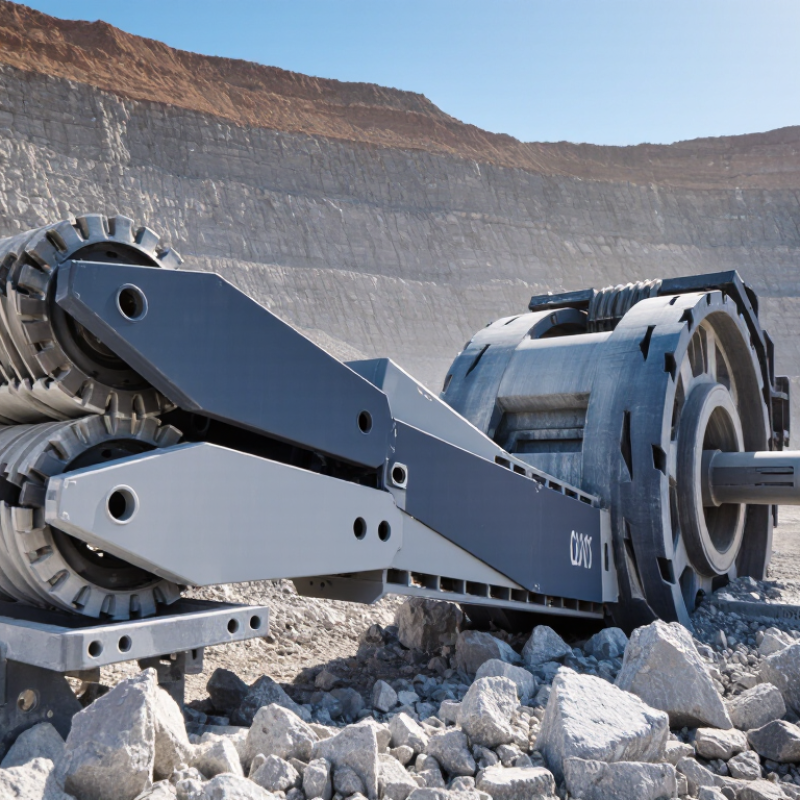
How to Choose a Plate for Jaw Crusher in 2026?
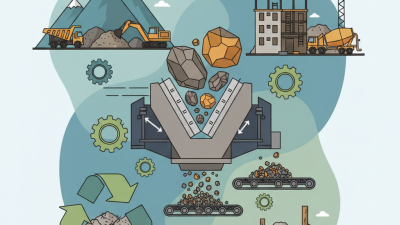
A jaw crusher plate is not a passive wall. It receives impact, compresses rock, and shapes the product size. Its tooth profile also influences the nip angle, throughput, and energy demand. In field inspections, uneven wear often reveals a mismatch before production figures do. One side may look sharp while the lower section becomes smooth and thin.
Start with the feed material. Hard, abrasive granite needs a wear-resistant alloy and a suitable plate profile. Softer limestone may benefit from a different balance between toughness and wear life. Feed size matters too. Oversized rocks can concentrate force near the top, causing cracks or premature loosening. Moist clay can block the chamber and change how the plate wears. Small details matter.
The USGS Mineral Commodity Summaries 2024 estimated U.S. crushed-stone output at about 1.5 billion metric tons in 2023. That scale explains why minor wear-rate improvements can affect major operating costs. Deloitte’s Tracking the Trends 2024 also identifies productivity and maintenance control as persistent mining priorities. Plate selection supports both, but the data is not always clean. Laboratory abrasion results may not predict a wet, irregular quarry feed. ASTM G65 testing can help compare materials, yet site trials remain essential. Measure closed-side setting, power draw, product shape, and plate weight before changing the design. The cheapest plate may be the costliest mistake.
| Selection Dimension | Common Options | Typical Characteristics | Best-Suited Conditions | Main Selection Consideration |
|---|---|---|---|---|
| Primary Function | Fixed jaw plate and swing jaw plate | Create the crushing chamber and transmit compressive force to the feed material | All jaw-crusher applications | The profiles and mounting dimensions must match the crusher model and installation position |
| Standard Material | Hadfield manganese steel, generally about 11–14% manganese | High toughness with the ability to work-harden under impact and compressive loading | Hard rock, recycled concrete, and applications with moderate to high impact | A practical general-purpose choice when impact loading is significant |
| Low-Alloy Steel Option | Heat-treated low-alloy steel | Higher hardness than conventional manganese steel, with lower tolerance for severe impact | Less abrasive rock, smaller feed sizes, and controlled operating conditions | Consider when abrasion is more important than impact resistance |
| High-Chromium Cast Iron | High-chromium white iron or composite wear material | Very high wear resistance but comparatively low impact toughness | Highly abrasive, relatively low-impact feed and carefully controlled applications | Avoid where tramp iron, oversize rock, or high-impact shocks are common |
| Feed Abrasiveness | Low, medium, or high silica and abrasive-mineral content | Abrasive minerals accelerate tooth rounding, thickness loss, and profile wear | Quarry rock, granite, basalt, concrete, recycled asphalt, and mineral ores | Use wear-resistant material and a suitable tooth profile for high-abrasion feed |
| Feed Hardness | Soft to medium rock, hard rock, and very hard rock | Harder feed generally requires stronger resistance to abrasive wear and localized damage | Limestone, sandstone, granite, basalt, and iron-bearing ores | Choose based on actual feed testing rather than rock name alone |
| Jaw Plate Profile | Standard, coarse-tooth, fine-tooth, or corrugated profile | Tooth shape affects gripping, throughput, product size, and wear distribution | Different feed sizes, discharge settings, and material shapes | Use deeper teeth for coarse or slabby feed and finer teeth for smaller feed |
| Feed Size | Below approximately 60% of the crusher feed opening; oversize feed requires special control | Properly sized feed reduces bridging, uneven loading, and localized plate breakage | Primary and secondary crushing circuits | Confirm the maximum lump size against the crusher's rated feed opening |
| Closed-Side Setting | Small, medium, or large discharge setting | A smaller setting usually increases reduction and may increase wear and power demand | Applications requiring different product sizes | Select the plate profile according to the target product and operating setting |
| Impact Level | Low, moderate, or severe impact | Impact can cause cracking, breakage, or accelerated work-hardening requirements | Large blasted rock, recycled demolition material, and tramp-metal risk | Prioritize toughness and correct feed preparation over maximum hardness |
| Wear Pattern | Uniform wear, top wear, bottom wear, or localized grooving | Uneven wear can reduce capacity, alter the crushing chamber, and increase energy use | Continuous production and high-throughput crushing | Rotate or reverse reversible plates where permitted by the design |
| Plate Thickness | Original thickness specified by the crusher manufacturer | Thickness influences service life, chamber geometry, and mechanical fit | Every jaw-crusher model | Do not substitute a thicker or thinner plate without checking clearances and fastening strength |
| Installation Fit | Crusher model, plate location, bolt pattern, wedge arrangement, and seating surface | Incorrect fit may cause movement, stress concentration, or premature failure | Replacement and maintenance work | Verify drawings, dimensions, mounting holes, contact surfaces, and tightening procedure |
| Expected Service-Life Indicator | Wear thickness, tooth height, throughput, and operating hours | Service life varies with feed properties, moisture, setting, loading, and maintenance | Performance comparison between plate selections | Compare cost per crushed tonne rather than purchase price alone |
| Recommended Inspection | Visual inspection, thickness measurement, bolt inspection, and profile assessment | Regular checks identify cracking, loosening, excessive thinning, and unsafe profiles | Before start-up, during scheduled maintenance, and after abnormal events | Follow the crusher operating manual and site safety procedures |